The fourth global coral bleaching event, the most widespread and intense on record, has likely concluded in mid-2025, NOAA experts have determined following an analysis of satellite data and field bleaching observations. From early 2023 to mid-2025, 84% of the world’s coral reefs were subject to bleaching-level heat stress across all three coral reef-containing ocean basins, the Pacific, Atlantic and Indian Oceans, with mass bleaching documented in at least 83 countries and territories.
The event was confirmed by NOAA on 15 April 2024. Following severe bleaching in Western Australia in early 2025, global heat stress has been in decline, with only isolated reports of bleaching since. NOAA’s Coral Reef Watch reported that the Western Australia event likely bookended the fourth global event, confirming the conclusion only after no widespread, large-scale bleaching was reported during the austral summer of December 2025 to February 2026.
The scale of the fourth event represents a marked escalation on those that preceded it. During the first global coral bleaching event in 1998, 21% of the world’s reefs experienced bleaching-level heat stress. This rose to 37% in the second event in 2010 and 68% during the third event from 2014 to 2017, before reaching 84% in the fourth. Each successive global event has been more widespread and more severe than the last.
We needed to confirm that no widespread, large-scale bleaching was reported anywhere during the austral summer which ran from December 2025 through February 2026, before we were confident the event had ended. We are now in the era where reefs will bleach on a near-annual basis, which means defining when global events begin and end is becoming increasingly difficult. The plan moving forward is to rely on field bleaching observations to determine if and when global events are happening.
Derek Manzello, Coordinator of NOAA’s Coral Reef Watch
Bleaching and the status and trends of coral reefs
Large-scale coral bleaching events caused by elevated sea surface temperatures are the single greatest disturbance to the world’s coral reefs. The GCRMN works through a global network of scientists, managers and organisations to strengthen the provision of best available scientific information on the status and trends of coral reef ecosystems, for their conservation and management.
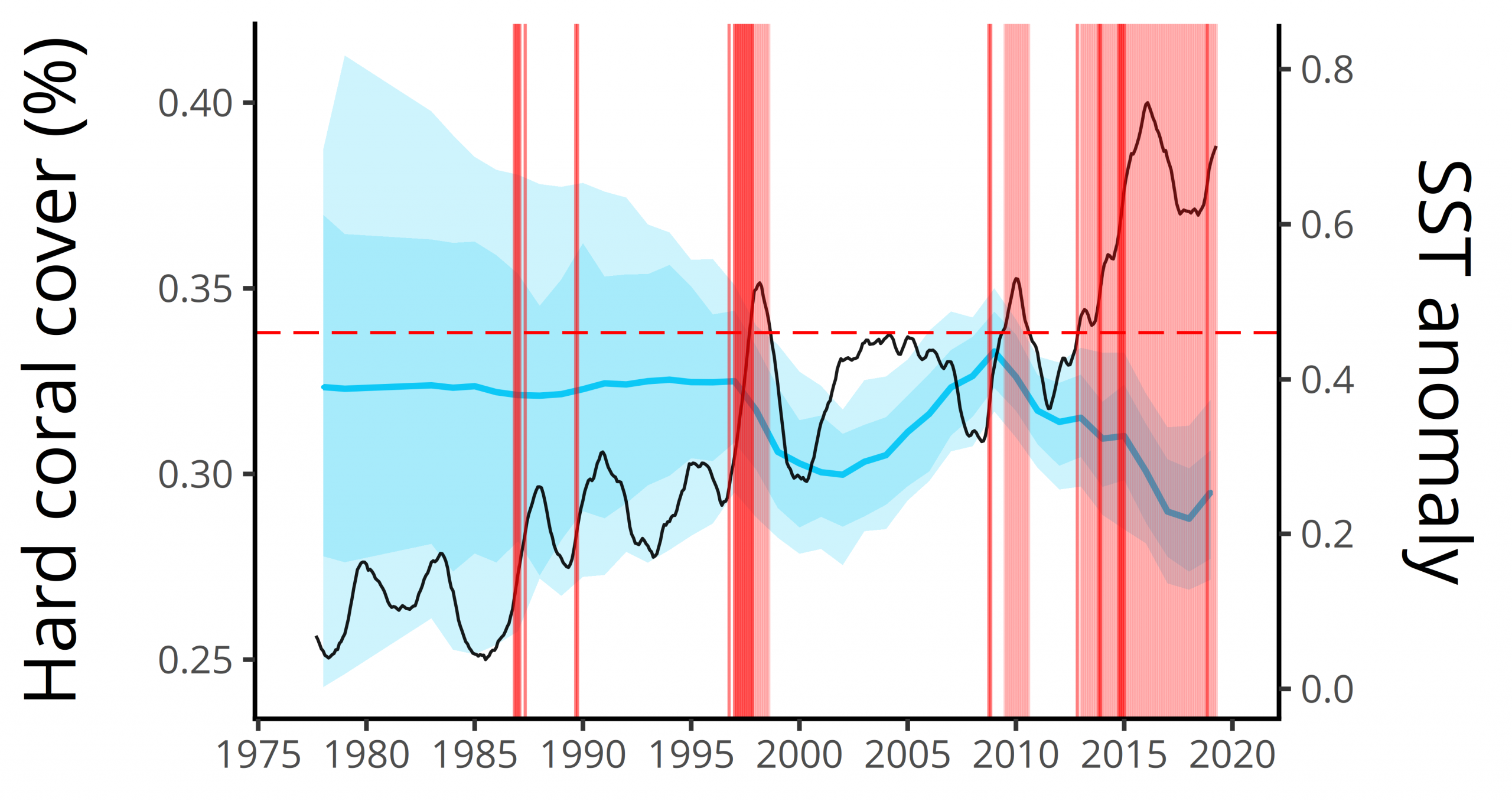
The association between bleaching and reef decline is evidenced across the GCRMN’s monitoring record. The Status of Coral Reefs of the World: 2020 report found that global coral cover declined by 14% between 2009 and 2018, a loss driven primarily by recurring large-scale bleaching events, and that declines in coral cover were closely associated with periods of either rapid increase or sustained high sea surface temperature anomalies. This long-term association, which has been recorded across regional scales, emphasises the impact of the unprecedented heat stress of the fourth event, as rising ocean temperatures increasingly limit the opportunity for reefs to re-establish between disturbances.
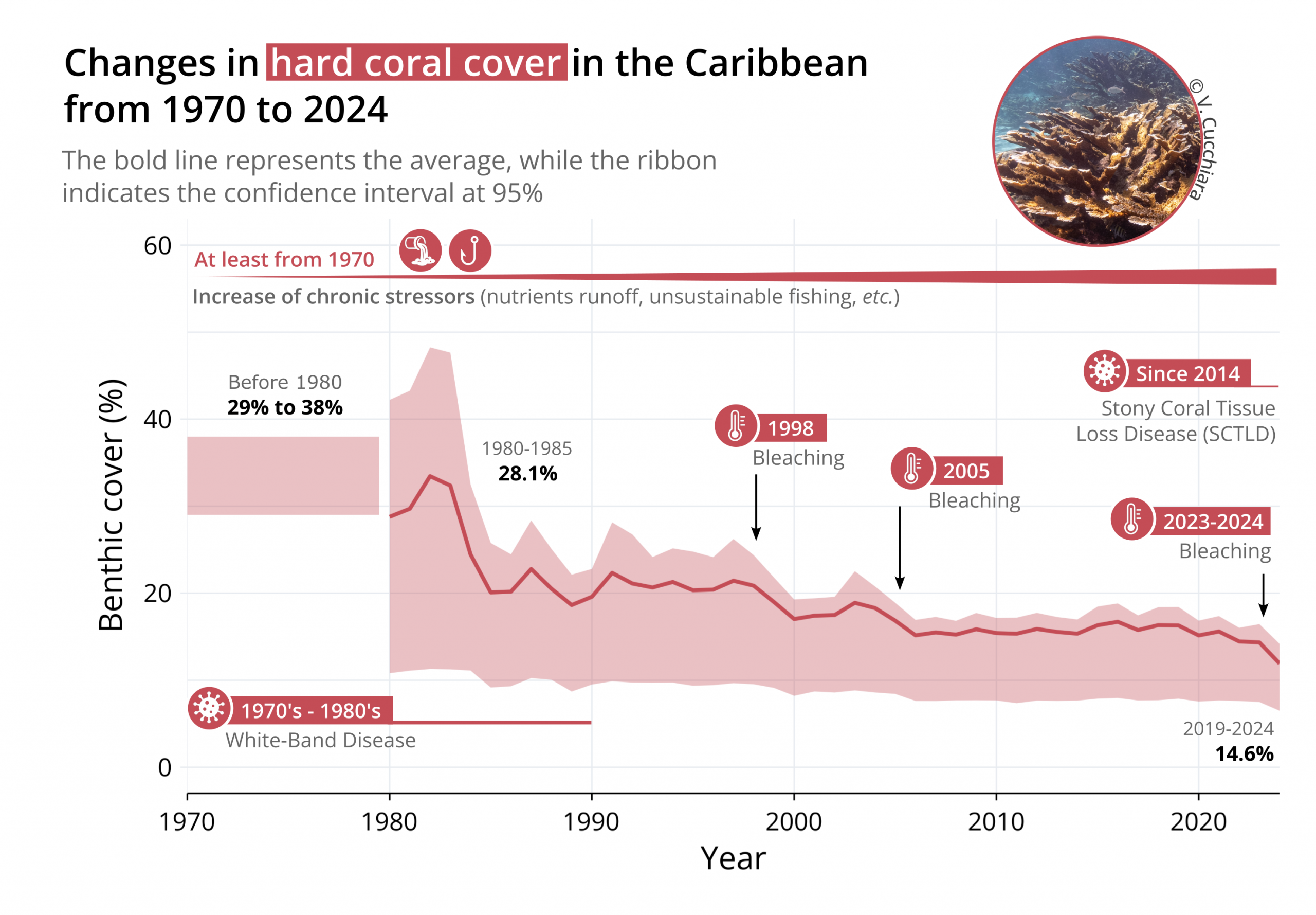
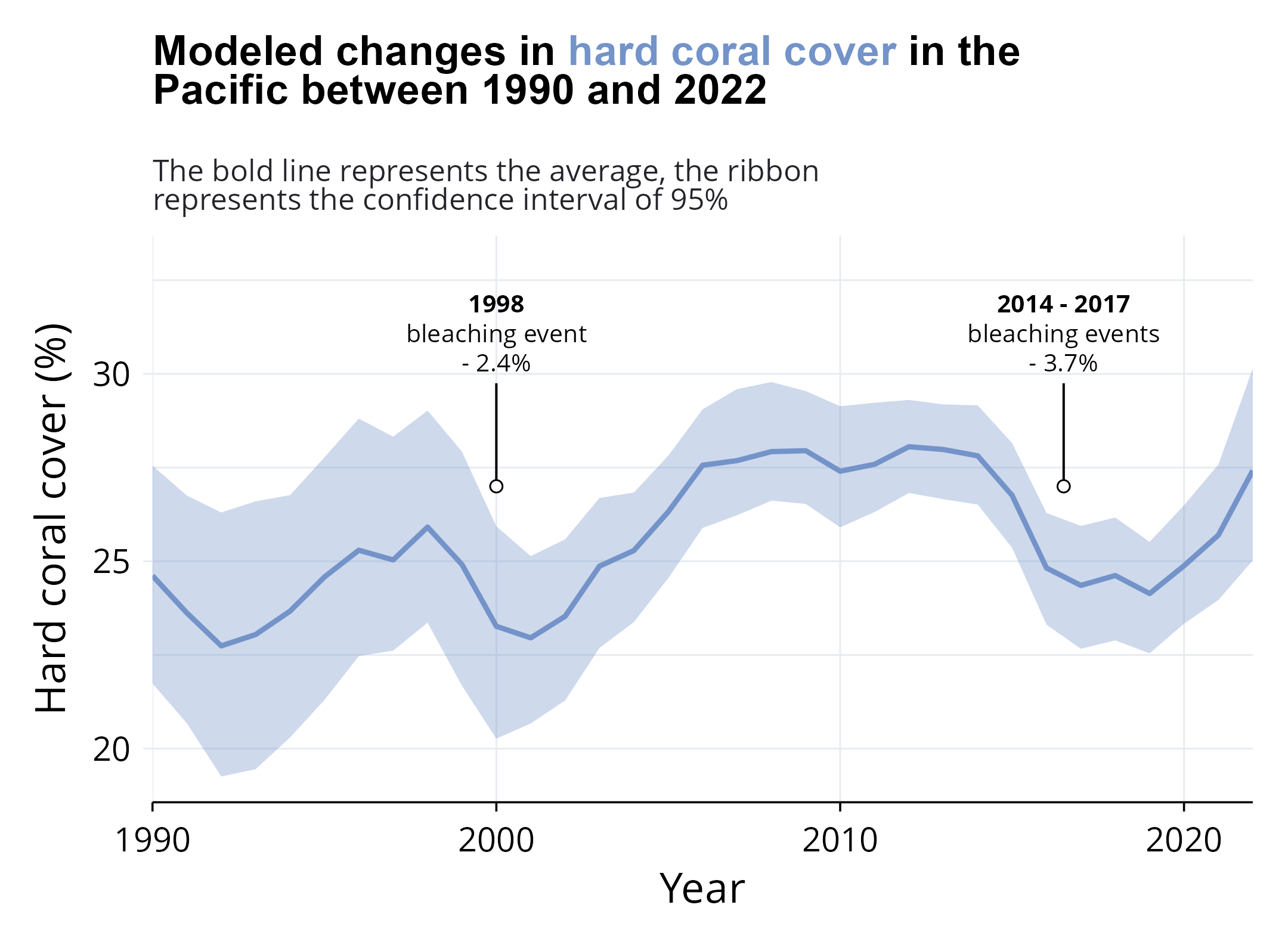
Trends in hard coral cover and associated global coral bleaching events at the global and regional scales (left to right): The Status of Coral Reefs of the World: 2020, The Status and Trends of Caribbean Coral Reefs: 1970 – 2024, and the Status and Trends of Coral Reefs of the Pacific: 1980 – 2023.
Resistance, change and the case for sustained monitoring
Despite the massive scale of the fourth event, not all reef areas bleached, even when exposed to high ocean temperatures. Scientists are now examining these locations to understand what factors may have contributed to their ability to resist bleaching. This reflects a broader picture in the GCRMN’s long-term monitoring that the response of reefs to disturbance varies. Periods of increasing coral cover have also been recorded following past disturbances, though increases in cover alone do not necessarily signal a full return to prior ecological condition.
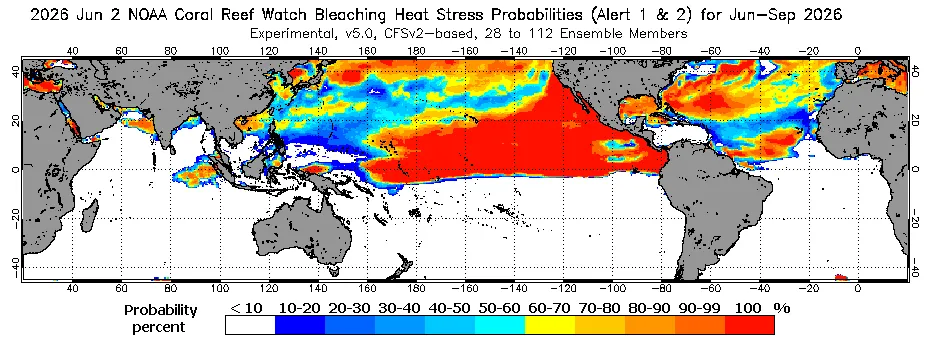
NOAA Coral Reef Watch’s four month bleaching forecast, showing the percent probability of alert level 1 and 2 bleaching risk across the globe. [Credit: NOAA Coral Reef Watch]
The end of the fourth global event offers no respite. NOAA has cautioned that the expected emergence of El Niño in the coming months will raise ocean temperatures and could bring a return to widespread bleaching, with a high risk flagged for much of the north Pacific including Hawai’i, as well as Florida and the Caribbean later this summer. Since 1998, every strong El Niño has coincided with a global bleaching event. Even with the fourth event over, sea surface temperatures remain higher than they were 25 to 30 years ago, when the first global event occurred. NOAA’s Coral Reef Watch has noted that reefs are now entering an era of near-annual bleaching, which makes defining the start and end of global events increasingly difficult.
In this context, credible, sustained, long-term monitoring is fundamental. Understanding which reefs decline, which persist and which resist, and why, is essential to informing the conservation and management decisions that will shape the future of coral reefs. The GCRMN will continue to work with its regional networks and partners to provide this evidence base.
Looking ahead to the 2025 global report
A clearer picture of how the world’s reefs have fared through this period will emerge with the forthcoming Status of Coral Reefs of the World: 2025 report, currently under development and due for release later this year. Drawing on the network’s regional monitoring, the report will present the status and trends of coral reefs from 1980 to 2024, providing the most up-to-date global synthesis of how coral reefs are changing in a warming ocean.